Accelerate Your Recovery with Shockwave Therapy
Move Podiatry offers Extracorporeal Shockwave Therapy (ESWT) in our Manly clinic - a leading-edge, non-surgical treatment clinically proven to stimulate your body's natural healing process. It's designed to fix the source of your chronic pain, not just mask the symptoms, getting you back on your feet faster.
What is
Shockwave Therapy?
Despite the name, Shockwave Therapy is not an electric shock. This advanced technology uses high-energy acoustic sound waves (or pressure waves), which are delivered through a handheld probe directly to your injured tissue.
Think of it as a way to "re-boot" your body's healing response. For chronic injuries, the healing process has often stalled. Shockwave therapy creates a new, controlled healing response that accelerates tissue repair, breaks down scar tissue, and promotes new blood vessel growth.
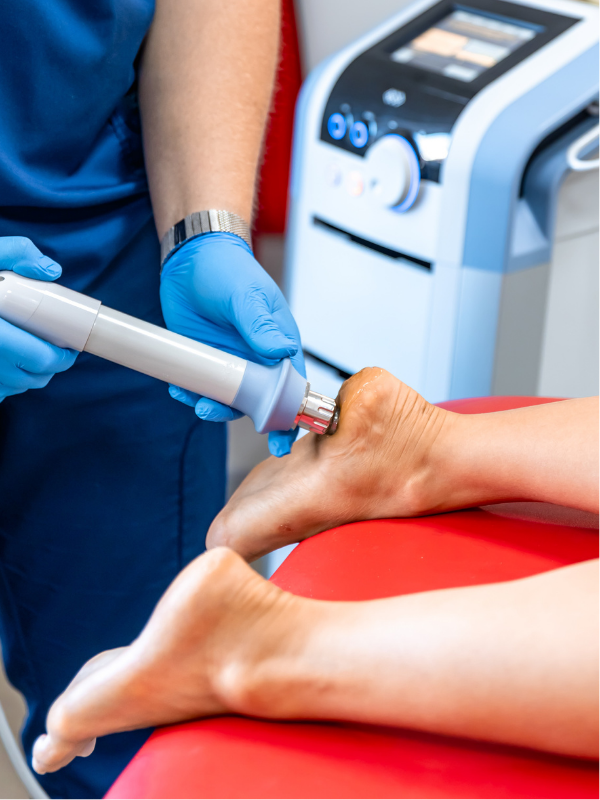
Is Shockwave Therapy Right for You?
Shockwave is one of the most effective treatments for stubborn, chronic conditions (pain lasting more than 3 months) that have failed to improve with standard care.
If you feel like you’ve tried everything for your nagging pain, this may be the solution you’ve been looking for.
Chronic Plantar Fasciitis
Shockwave stimulates new blood flow and breaks down scar tissue in the thickened fascia. This directly targets the source of your heel pain to accelerate repair and provide lasting relief.
Achilles Tendinopathy
The acoustic waves create a powerful healing response in the degenerated tendon fibres. This promotes tissue regeneration and helps resolve chronic pain at the back of the heel.
Shin Splints
Shockwave targets the over-stressed tissue and inflammation where the muscle attaches to the shin bone. It calms the area and promotes healing, helping you get back to running pain-free.
Other Chronic Tendon Issues
For any tendon that is “stuck” in a chronic state of pain, shockwave re-boots the healing process. It provides a non-surgical solution for tendons that have not responded to rest or other treatments.
What to Expect During Your Shockwave Therapy Appointment
We make the entire process simple, fast, and comfortable. A typical shockwave session is added to your standard consultation.
A standard, evidence-based treatment plan involves 3-5 sessions, spaced approximately one week apart, to achieve the best and most long-lasting results.
Frequently Asked Questions
Does Shockwave Therapy hurt?
You will feel a strong pulsing or tapping sensation. Most patients describe it as “uncomfortable” or “a bit intense” rather than “painful.” We will communicate with you throughout and adjust the intensity to your tolerance. The good news is that it’s over in just a few minutes.
How many sessions will I need?
The evidence-based protocols for chronic conditions recommend a course of 3 to 5 weekly sessions. Your podiatrist will create a specific plan for you based on your condition, its severity, and how your body responds.
When will I notice the results?
This varies. Some patients feel noticeable relief within 24 hours. For others, the relief is more gradual over the course of the treatment. The therapy works by stimulating your body’s own healing, which takes time. The full benefits are often felt 4-6 weeks after the final session.
Are there any side effects?
This is one of the safest treatments available, which is why it’s so popular. The most common side effect is some temporary, mild tenderness or redness in the treated area, which typically fades within a day. There is no downtime required.
Can I continue to exercise during my treatment?
This is case-by-case. Your podiatrist will give you a specific plan. In general, we will modify your activity – not stop it completely. The goal is to reduce the load on the healing tissue while still allowing you to stay active.